Who Gets a Seat at the Clean Energy Table?
For Nigeria’s energy transition to be truly sustainable, it cannot leave behind the people who represent its future. Women and young people are not just beneficiaries of a cleaner energy system; they are among its most capable builders. Yet the structures that shape energy policy and investment have not always reflected this.
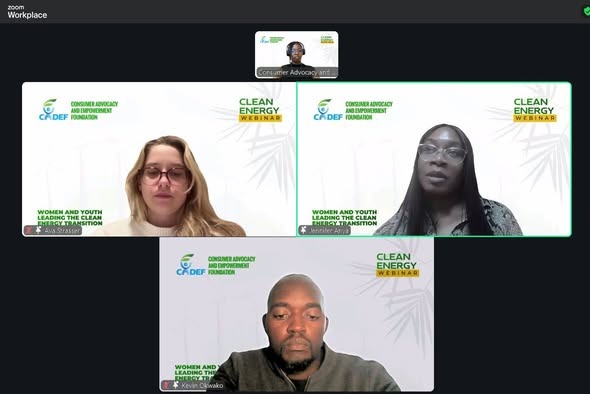
This was the conversation that brought stakeholders together for the Women and Youth Leading the Clean Energy Transition webinar, held on the 18th of February 2026. Consumer Advocacy and Empowerment Foundation (CADEF) was joined by experts from Sustainable Energy for All (SEforALL), the Nigeria Off-Grid Market Acceleration Program (NoMAP), and Jacob’s Ladder Africa (JLA) to explore what inclusive energy leadership looks like in practice.
The data shared at the session told a clear story. Gender-diverse boards are 60% more likely to reduce energy consumption, yet women-led energy firms currently receive less than 3% of available venture capital. Low awareness and complex financing remain the two biggest barriers to clean energy adoption for many Nigerians, and if the transition is to move beyond imported technologies, Nigeria’s youth must lead in designing and producing local solutions.
These are not small gaps. They are structural realities that require deliberate action from policymakers, investors, and civil societies alike.
At CADEF, we remain committed to advocating for a clean energy future that works for every Nigerian. Our Renew Energy Naija platform at der.cadefng.org is one practical step in that direction, helping consumers understand their options and connect with verified installers.
The platform features:
- A solar calculator that helps households and small businesses estimate their energy needs.
- Step-by-step consumer guidance on renewable energy options.
- Connections to verified installers, ensuring safe and trusted solutions.
Explore the Distributed Energy Resources (DER) Platform today: der.cadefng.org