
 Community Support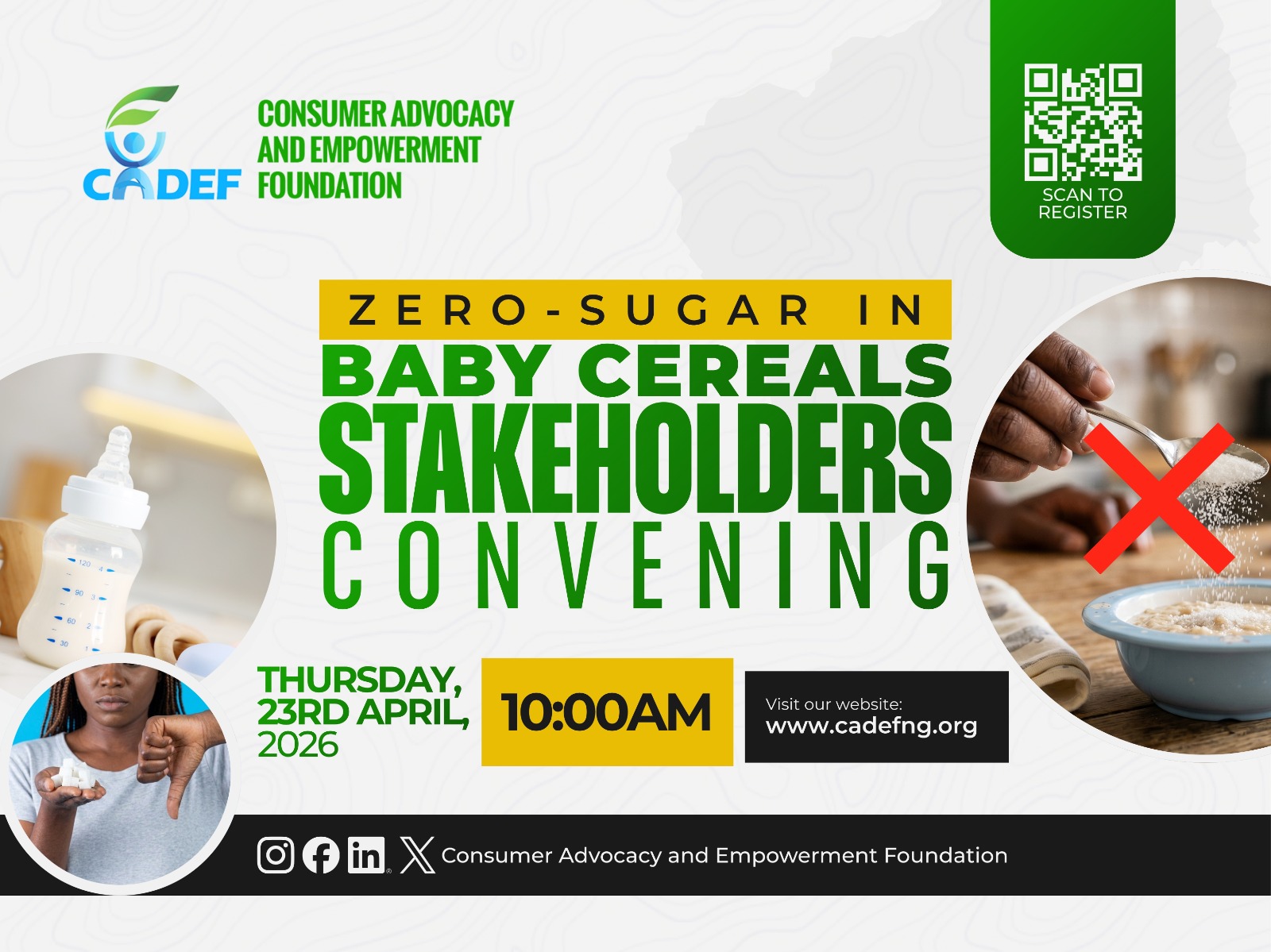
A baby's first foods should nourish, not merely add calories and create health risks that may last a lifetime.
But what happens when products made for babies contain added sugar that they simply do not need?
Early eating habits can influence health for years to come, which is why growing concerns about added sugar in baby foods are drawing attention from health advocates and consumer groups alike.
Consumer Advocacy and Empowerment Foundation (CADEF), in partnership with Public Eye, Switzerland, in April, assembled regulators, government representatives, civil society organizations, and development partners in Abuja to advance the Zero-Sugar in Baby Food campaign.
This strategic convening spotlighted the role of stakeholders in speaking up for the consumers (babies) who had no voice in policy-making, the presence of added sugar in baby cereals sold across Africa, its implications on the health of babies, and the need for stronger measures to better protect them.
The discussions reinforced a simple message: protecting children's health cannot rest on parents alone. Manufacturers, regulators, and policymakers all have a role to play in ensuring that foods marketed for infants put their well-being first.
Parents should not have to guess what is in the foods they buy for their babies. They deserve front-of-pack labels they can understand and standards that align with the World Health Organization’s recommendation—zero sugar for babies less than 2 years.
Early exposure to added sugar can shape taste preferences and increase the risk of tooth decay, obesity, and other chronic diseases later in life. That is why getting their first foods right matters.
Want to understand why health advocates, regulators, and consumer groups are calling for stronger action on added sugar in baby foods?
Watch the full Zero-Sugar in Baby Food dialogue on YouTube. Join the conversation